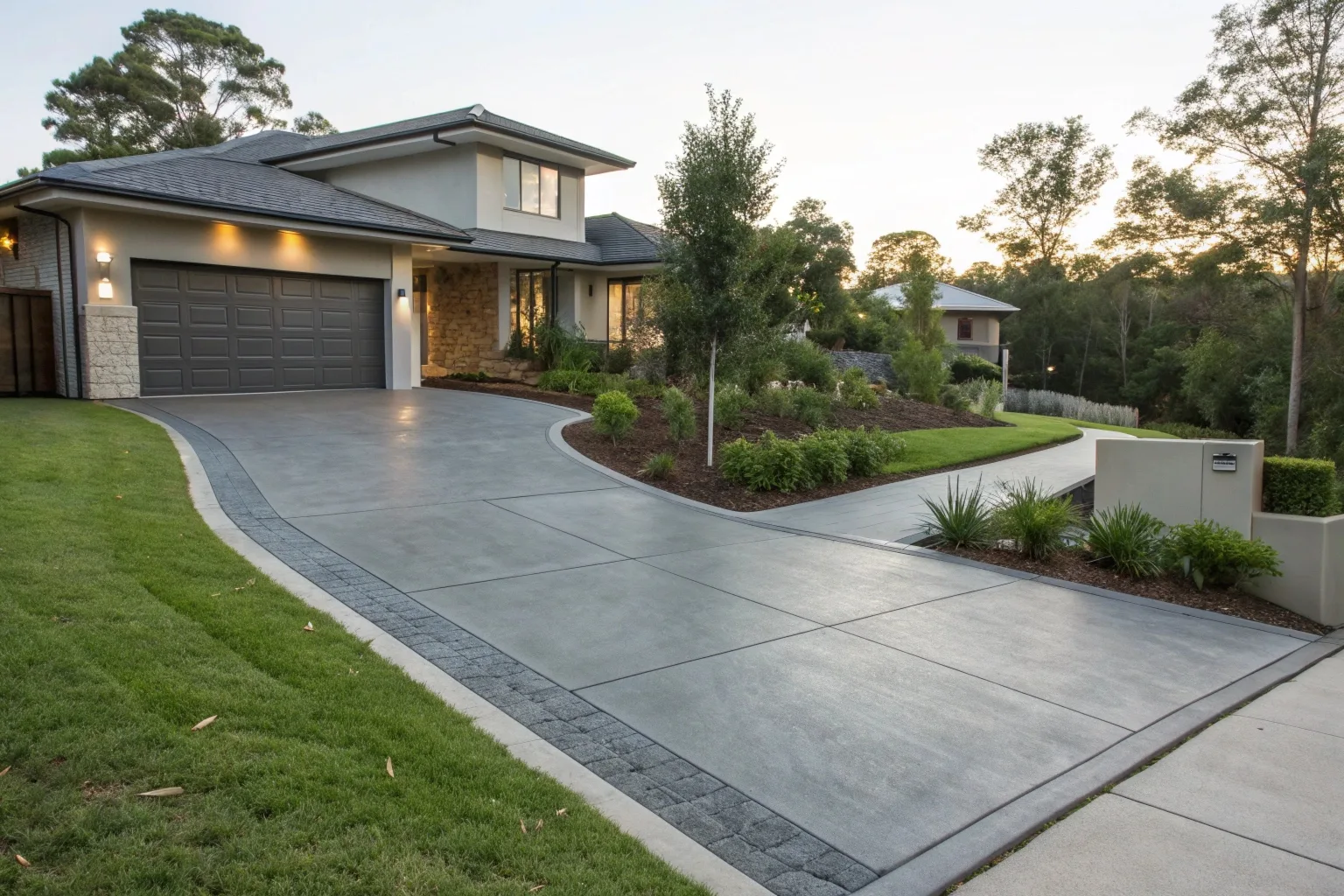
If you own one of Kingston’s older Garden City homes, check the heritage rules before you ask for driveway quotes. In this precinct, stamped concrete and exposed aggregate are not permitted on driveways or verge crossings. Bare concrete isn’t permitted on them either.
These homes sit inside the Kingston/Griffith Housing Precinct, which is registered on the ACT Heritage Register. The houses were built in 1926–27. The precinct is the only part of Kingston’s housing that has not been redeveloped for strata-titled units. Not every home in Kingston is covered, so your first step is to find out whether yours is.
This guide explains how the rules for Kingston’s heritage precinct work. You’ll see which rules are mandatory and which are discretionary, what is restricted, and the order of approvals. With that knowledge, you can brief a concreter with confidence.
We’ll start with how to check your property. Then we’ll cover how the rules work, driveway finishes, verge crossings and layout, and paths and front-yard paving. We’ll finish with the approval order and a checklist to use before you ask for quotes.
In this guide:
- Is Your Kingston Home Inside the Heritage Precinct?
- How the Precinct Rules Work: “Shall” vs “Should”
- Driveway Finishes: What’s Not Permitted and What’s Preferred
- Verge Crossings, Driveway Position and Width
- Paths, Patios and Front-Yard Paving: The 40% Planting Rule
- The Approval Order: ACT Heritage First, Then City Services
- Before You Ask for Quotes: A Heritage Precinct Planning Checklist
Is Your Kingston Home Inside the Heritage Precinct?
The rules in this guide only apply if your home sits inside the registered precinct. So it’s worth checking this before you plan anything else.
The Kingston/Griffith Housing Precinct is a registered place on the ACT Heritage Register. The Kingston part of the precinct covers Sections 15, 16 and 17. On the Territory Plan Map, it is shown as Heritage Places Register Overlay H44.
In plain terms, the precinct is the block of Garden City housing built in Kingston in 1926–27. It is bounded by Dawes Street, Howitt Street, Kennedy Street, Leichhardt Street and Burke Crescent.
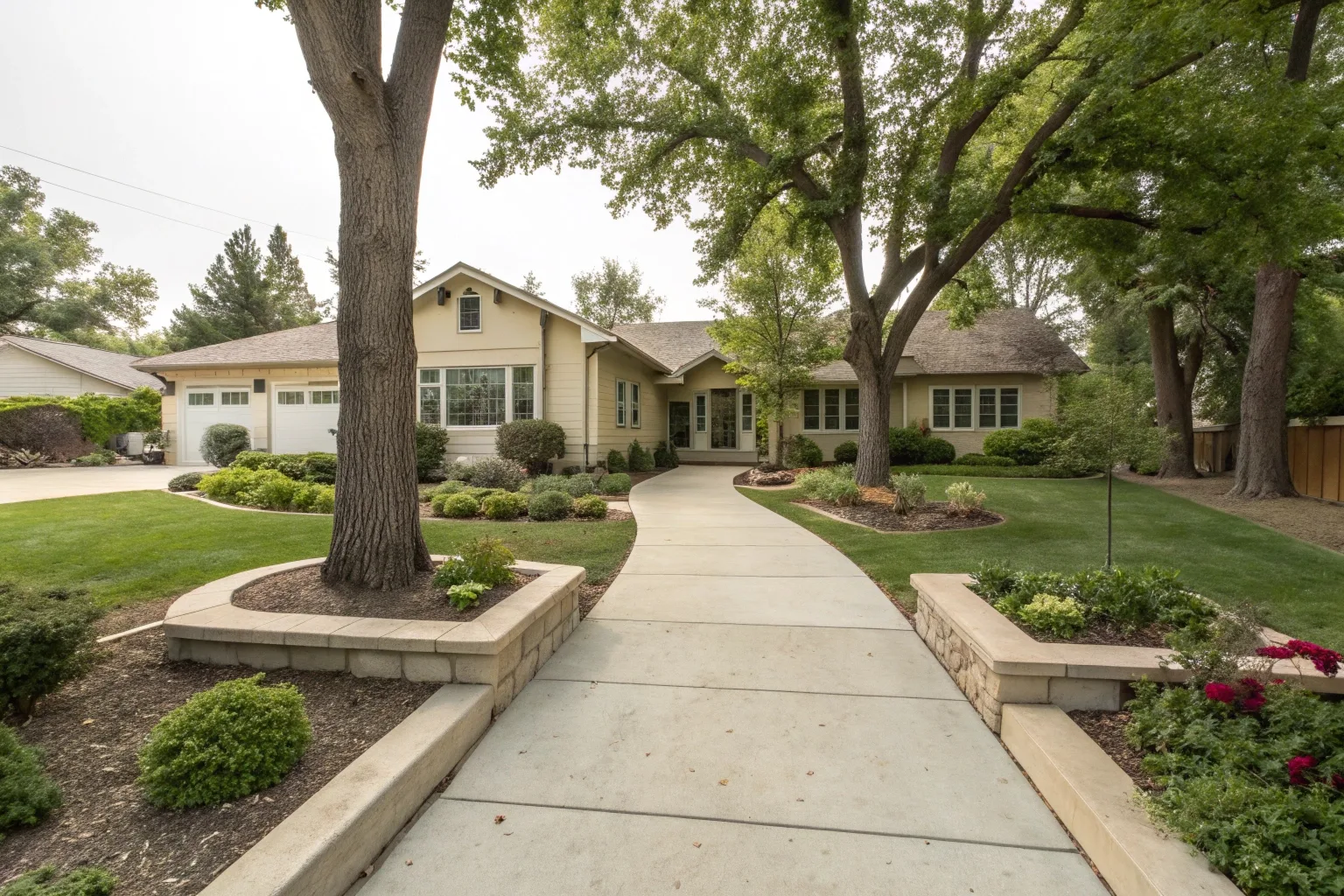
That street list gives you a good general picture, but it isn’t an exact legal boundary. The most reliable way to check your property is the Heritage layer on ACTmapi, the ACT Government’s online mapping tool. This is the check City Services points homeowners to when planning a driveway.
Quick check
- Is your home in the area bounded by Dawes, Howitt, Kennedy and Leichhardt streets and Burke Crescent?
- Open ACTmapi and turn on the Heritage layer.
- Find your block and see whether it falls within the registered precinct.
If it does, the rules in the rest of this guide apply to your driveway and paving plans.
How the Precinct Rules Work: “Shall” vs “Should”
The rules for the precinct are set out in the precinct’s entry on the ACT Heritage Register. The entry lists Specific Requirements, which are framed as Heritage Guidelines. Each one uses either “shall” or “should”, and that one word tells you how firm the rule is.
| Word in the rule | What it means |
|---|---|
| Shall | Mandatory. The requirement must be complied with. |
| Should | Discretionary. The requirement is subject to the Authority's discretion. |
Throughout this guide, we keep the rule numbers from the register entry, such as rule 2.4d. That way, you can look up the exact wording in the source yourself.
One thing to keep in mind: the register entry is older than the ACT’s current planning laws. It refers to the former Land (Planning and Environment) Act 1991 and to “the Authority”. Before you start any work, confirm the current requirements and approval pathway with ACT Heritage.
Driveway Finishes: What’s Not Permitted and What’s Preferred
Can you have a stamped or exposed aggregate concrete driveway in Kingston’s heritage precinct? No. Under rule 2.4d, strong textures, including stamped concrete, are not permitted on driveways or verge crossings. Bright colours, including bare or exposed aggregate concrete, are not permitted either. These are “shall” rules, so they are mandatory.
Rule 2.4i is discretionary. It says the driveway should have a uniform surface in subdued charcoal or earthen tones. Gravel, brick, clay or concrete pavers, or bitumen are preferred.
Because the register entry is older than current planning laws, confirm the current requirements with ACT Heritage.
| Not permitted (mandatory, rule 2.4d) | Preferred (discretionary, rule 2.4i) | Confirm with ACT Heritage |
|---|---|---|
| Strong textures, including stamped concrete | A uniform surface | Tinted or coloured poured concrete in subdued tones |
| Bright colours, including bare concrete and exposed aggregate | Subdued charcoal or earthen tones | |
| Gravel, brick, clay or concrete pavers, or bitumen |
If you’re thinking about coloured concrete in a charcoal or earthy tone, keep in mind that poured concrete is not on the register’s preferred list. Whether it would be accepted in the precinct has not been established. Ask ACT Heritage before you go ahead with this option.
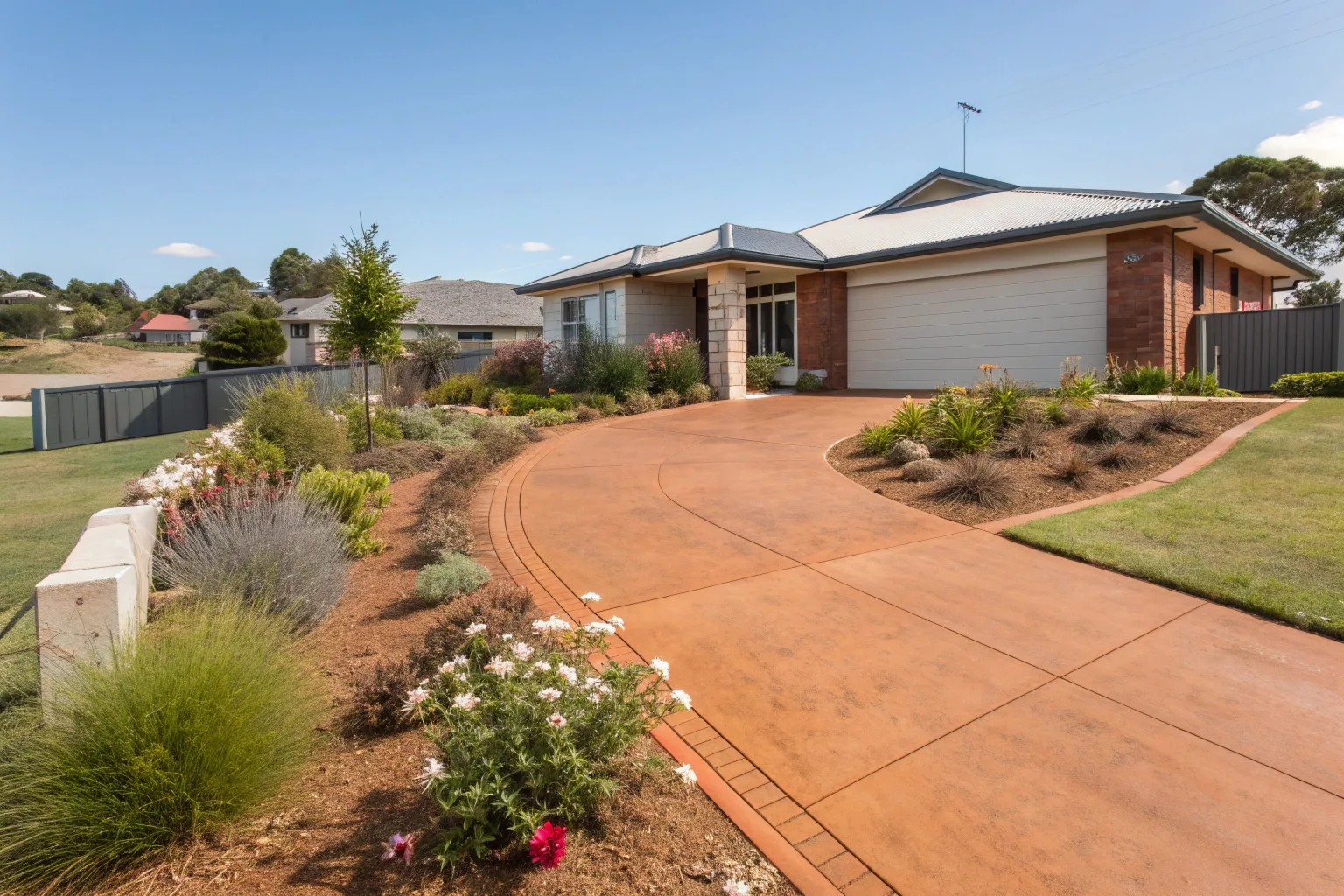
There is also a separate, ACT-wide note from City Services. It does not generally recommend exposed aggregate driveways, because material can wash off into the stormwater system. It may be permitted with an Erosion and Sediment Control Management Plan. This City Services pathway does not override the precinct rule. Inside the precinct, rule 2.4d still prohibits exposed aggregate on driveways and verge crossings.
Verge Crossings, Driveway Position and Width
The register entry also sets rules for where a driveway can go and how wide it can be. Some of these rules apply to the verge crossing, and some apply to the driveway inside your block.
Rules you must follow (mandatory):
- Rule 2.4a: Shared or paired verge crossings must be conserved in their original locations and width.
- Rule 2.4b: A block with a single street frontage may have no more than one verge crossing.
- Rule 2.4c: The driveway must follow the location of the verge crossing. It must be aligned close to the nearest side boundary.
- Rules 2.3a–b: Verges must stay grassed at their current widths. New paving on the verge is not permitted, unless the Authority considers it essential for safety or to restore an original path or driveway.
Rules that apply at the Authority’s discretion:
- Rule 2.4h: Between the front boundary and the building line, the driveway should be single-vehicle width, which means under 3.6 metres.
- Verge crossing surface: Verge crossings should have a bitumen surface.
In practice, this means your existing verge crossing sets the starting point for your driveway plans. If your block has a single street frontage, plan around one verge crossing, in its current position.
Paths, Patios and Front-Yard Paving: The 40% Planting Rule
Driveways aren’t the only hard surfaces the register entry covers. It also limits how much of your block can be paved, and where.
Under rule 2.1f, at least 40% of a residential block must remain planting area. The register defines planting area as land that is not covered by buildings, vehicle areas or any other impermeable surface.
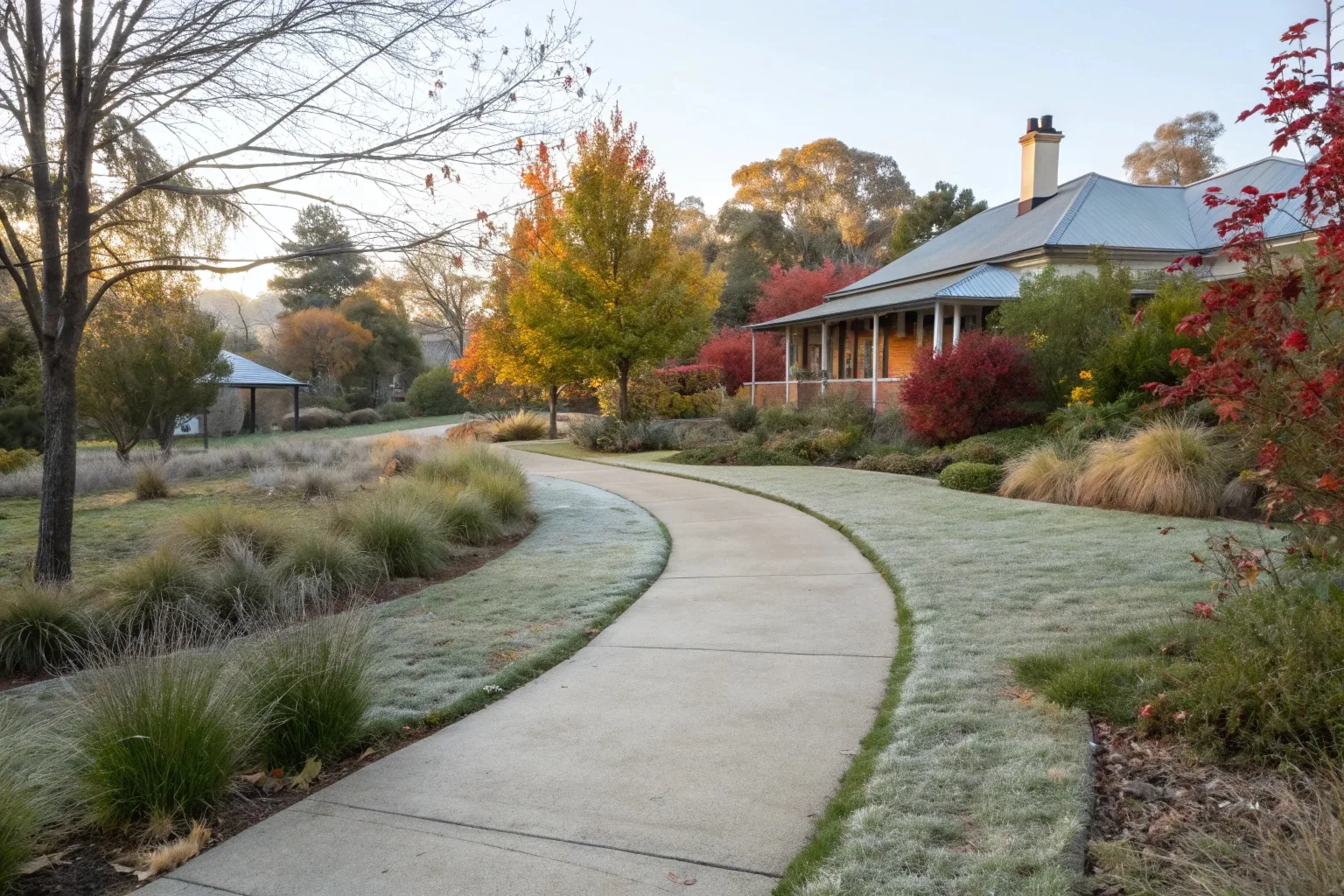
The register entry also sets these limits:
- Front-yard paving: Hard surfacing between the building line and the front boundary, other than paths and driveways, should be avoided. This is a discretionary rule.
- Vehicle space: Development must not preclude vehicle accommodation behind the building line. If you are planning a garage or carport slab, keep this in mind when choosing where it goes.
So before you add a concrete path, patio or slab, check how it affects the planting area on your block. If you’re unsure how the rule applies to your plans, confirm with ACT Heritage.
The Approval Order: ACT Heritage First, Then City Services
According to City Services’ driveway application guidance, you need approval to add a driveway, modify one or add a second one. This includes changes to a driveway’s size, shape, location or surface type.
If your property is in a nominated heritage area, you need approval from ACT Heritage before you submit a driveway application to City Services.
A note on like-for-like replacement: City Services says replacing a driveway like-for-like in plain or asphaltic concrete does not need design approval from City Services. This applies only when the shape, size, location and surface type stay the same. However, rule 2.4d of the precinct’s register entry prohibits bare concrete on driveways and verge crossings. How these two rules work together for a precinct property has not been established. Confirm with ACT Heritage before you assume a like-for-like replacement is allowed.
Here is the order to follow:
- Check your status. Use the Heritage layer on ACTmapi to confirm whether your property is inside the precinct.
- Seek ACT Heritage approval. Do this before you lodge anything with City Services.
- Lodge your City Services driveway application. City Services requires driveway concrete to be grade 32 (32 MPa). Where there are mature trees on the verge, the driveway must sit outside the canopy drip line or the MIS 07 clearances, whichever is greater.
- Protect trees and the reserve during works. Under rule 1.2c, vehicles, equipment and materials must not be parked or stored within tree drip lines or on the reserve.

Once you know which rules apply to your home, you’re welcome to ask us questions about concrete work in Kingston.
Before You Ask for Quotes: A Heritage Precinct Planning Checklist
Use this checklist to bring together the rules covered above before you speak with a concreter.
- Confirm whether your property is inside the precinct, using the Heritage layer on ACTmapi.
- Avoid stamped concrete, exposed aggregate, bare concrete and bright colours on your driveway and verge crossing.
- Keep your existing verge crossing in its current location and width.
- Plan for a single-vehicle-width driveway (under 3.6 metres) between the front boundary and the building line.
- Protect the 40% planting area on your block.
- Keep vehicles, equipment and materials clear of tree drip lines and the reserve during works.
- Get ACT Heritage approval before you lodge your City Services driveway application.
- Confirm the current requirements with ACT Heritage.
When you’re ready, bring this checklist and any approvals you have to your quote conversation. You can talk to our Kingston concreting team about your plans.
Ready to Get Started?
Get a free, no-obligation quote for your project — Canberra-wide, ACT-standard concrete work.