Home » Blog » Concrete Pool Surrounds: Balancing Safety and Style
Pool Surrounds & Outdoor Living
Concrete Pool Surrounds: Balancing Safety and Style
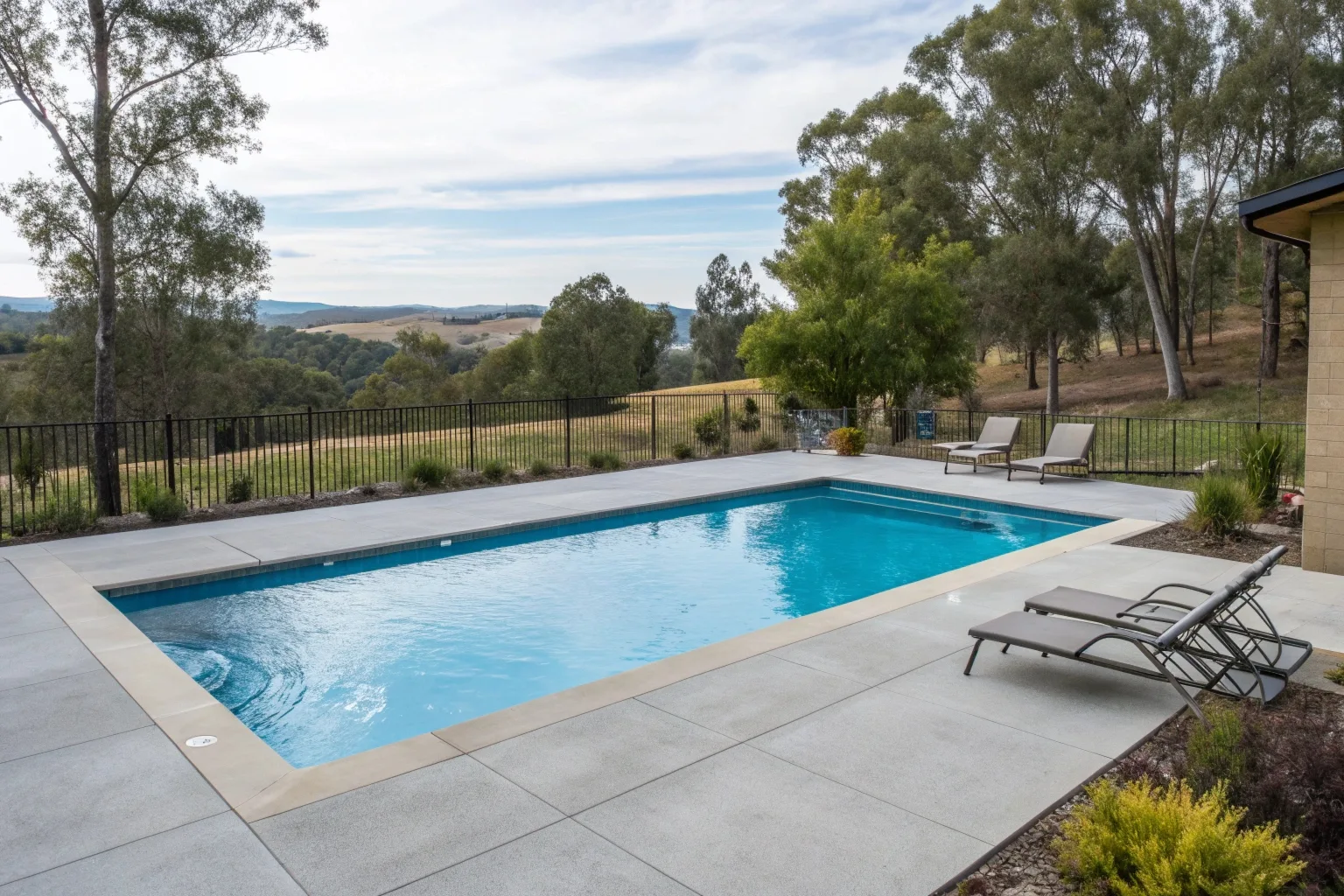
A pool surround has to do two jobs at once: it needs to look good, and it needs to be genuinely safe to walk on with bare, wet feet. Getting the balance right between those two things is really what separates a pool deck that works from one that ends up being either a slip hazard or a scorching-hot surface every summer.
Slip Resistance Comes First
Safety around a pool isn’t optional — a smooth, highly polished concrete finish might look striking, but it’s a poor choice for a wet, bare-footed environment. This is why exposed aggregate concrete is such a common choice for pool surrounds: the exposed stone texture provides natural grip underfoot without needing an artificial non-slip additive. For a closer comparison of finish types, see our guide on stamped, stencilled and exposed aggregate concrete.
Managing Heat Underfoot
Canberra summers can push surface temperatures well past comfortable, and a dark, densely finished concrete surface will hold heat more than a lighter one. Lighter colour tones and certain heat-reflective concrete options help keep a pool deck comfortable to walk on during the hottest parts of the day — worth factoring in at the design stage rather than after the pour, when colour options become far more limited.
Style Options That Still Work Hard
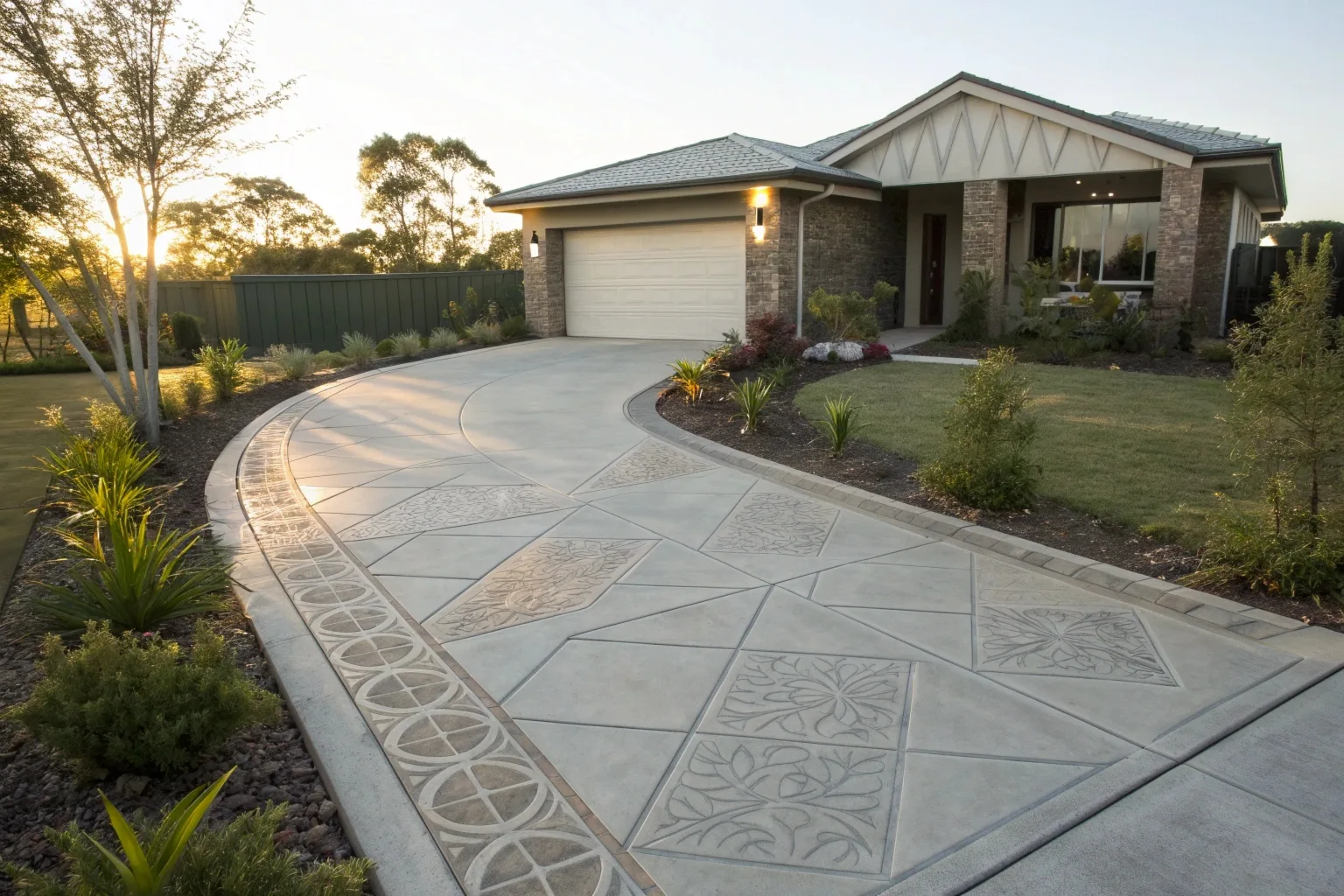
None of this means a pool surround has to be purely functional. Stamped and stencilled decorative finishes can still be used around pools in combination with a suitable non-slip treatment or texture, giving you a genuinely decorative surface that doesn’t compromise on safety. The key is choosing a finish and treatment combination that’s actually rated for wet, barefoot use — not assuming any decorative finish will automatically be safe in that setting.
Sealing Matters More Around Water
A pool surround is exposed to constant splashing, pool chemicals, and sun — a demanding combination for any surface. Regular sealing helps protect against staining and moisture damage in an environment that sees far more water exposure than a typical driveway or patio. Our guide on how often to seal concrete in Canberra covers the general principles, though pool surrounds often warrant closer attention given how much water they’re exposed to. It’s a pattern we see often on pool surrounds across Weston Creek and similar established suburbs.
Frequently Asked Questions
Is exposed aggregate the only safe option for a pool surround?
No — other finishes can be made suitably slip-resistant with the right texture or non-slip treatment, but exposed aggregate provides that grip naturally without extra treatment.
Do lighter-coloured pool surrounds really stay cooler?
Yes — lighter colours reflect more heat than darker tones, which noticeably affects how hot a surface gets underfoot on a sunny day.
Can an existing pool surround be resurfaced instead of replaced?
Depending on its current condition, resurfacing or applying a new decorative overlay may be possible instead of a full replacement — an on-site assessment is the best way to confirm which approach suits your situation.
Ready to Get Started?
Get a free, no-obligation quote for your project — Canberra-wide, ACT-standard concrete work.